Designing the Weekend Retreat: Principles for Chic and Livable Cottage Interiors
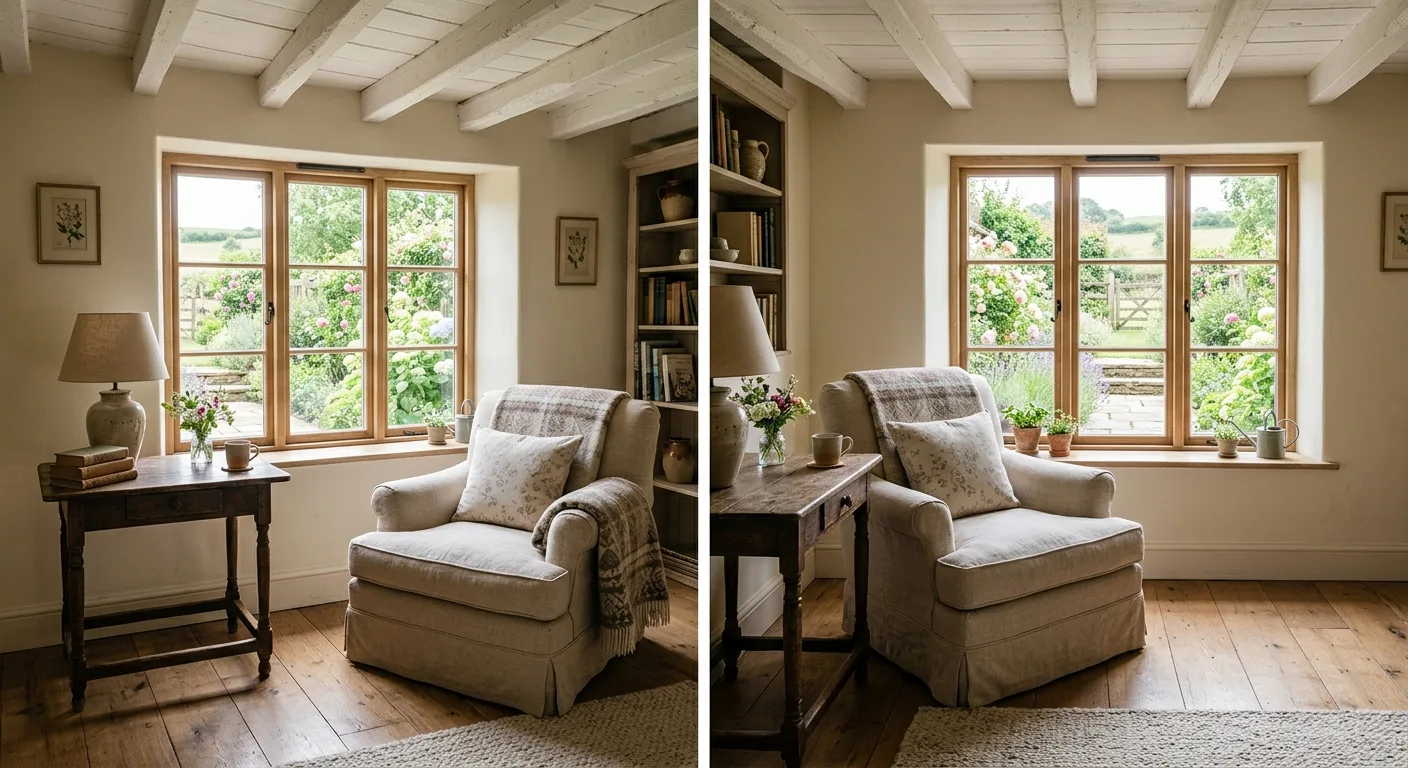
The Weekend Retreat as a Different Kind of Problem
New York residential designers whose practices include country properties understand that the cottage or weekend house presents a fundamentally different brief from the city apartment. The goal is not to replicate the refinement of the primary residence in a rural setting; it is to achieve a kind of ease that the city apartment, for all its elegance, cannot. A weekend house that feels like a showroom has missed its purpose. One that feels genuinely relaxed (where a muddy dog and a glass of wine left on the coffee table belong equally) while still being beautiful and well-considered: that is the harder achievement.
This distinction shapes every decision from the initial site visit forward. The materials must be more forgiving. The furniture must be comfortable in a more unconditional way than city pieces, which can afford to be slightly precious. The color palette tends toward warmth and enclosure rather than the cooler, more restrained registers that read well in Manhattan apartments. And the relationship between indoor and outdoor space (often vestigial in the city) becomes central to how the interior is organized and experienced.
Understanding the Architecture
Weekend retreats in the Hudson Valley, on the North Fork of Long Island, in the Hamptons, and in the Connecticut hills each carry their own architectural character, and the interior designer’s first responsibility is to understand what that character is and how to work with it rather than against it. A modest Greek Revival cottage in the Hudson Valley has proportions and a historical logic that argue for a particular approach: restrained color, furniture scaled to modest room heights, an acknowledgment of the building’s early nineteenth-century origins without becoming a museum piece.
A mid-century modern house on the South Fork, by contrast, offers a different vocabulary: the interpenetration of indoor and outdoor space, the long horizontal lines, the structural frankness that expresses beams and columns rather than concealing them. Here, the furnishings should participate in that same formal honesty. Low-slung upholstered pieces, natural materials with visible grain and texture, art that works with the light rather than fighting it.
The common failure in country house design is the imposition of a preconceived aesthetic that has no relationship to the building itself. The designer who arrives with a fully formed “look” and applies it regardless of what the architecture is saying produces interiors that feel alienated from their settings: beautiful perhaps in a generic way, but without the sense of belonging that makes a weekend house genuinely restorative.
Materials for Longevity and Ease
The material logic of a weekend retreat is straightforward but demands discipline to execute. Every surface must be able to tolerate the specific demands of seasonal, high-use occupation: sand tracked in from the beach, moisture from wet bathing suits, the accelerated cycling of heat and cold in houses that are opened and closed with the seasons. This is not an argument for indestructible materials that sacrifice warmth; it is an argument for intelligent specification.
Stone floors in entries and kitchens are practical and beautiful; honed limestone or slate develops a character under use that polished finishes never achieve. Wide-plank wood floors, particularly in reclaimed or character-grade material, absorb the dents and scratches of country living without looking damaged (they simply look lived in, which is entirely appropriate). Sisal and seagrass rugs underfoot are honest country materials that can be cleaned, replaced affordably, and that contribute a texture that wall-to-wall carpet cannot.
Upholstery in a weekend house should prioritize genuine comfort over visual delicacy. Deep sofas with loose cushions in durable performance linen or canvas invite the occupants to actually use them: to lie down with a book, to sit for long evenings with guests. The sofa that must be perched upon rather than inhabited is misplaced in this context. Slipcovers in washable cotton are not a compromise in a country house; they are an intelligent answer to the conditions.
Color and the Country Palette
The country interior tolerates (and rewards) a richness of color that would feel overwhelming in a Manhattan apartment. The lower light levels typical of older cottages with modest window openings, the natural materials that already contribute warmth, and the lush color of the landscape visible through the windows all create conditions in which saturated wall colors feel anchored rather than aggressive.
Deep greens drawn from the surrounding landscape, warm ochres and terracottas, the complex off-whites of old plaster: these colors have a long history in vernacular American and European country interiors because they work in context. They do not need to be deployed universally; a bedroom painted in a quiet linen white and a dining room in a deep bottle green can coexist within the same house without contradiction, provided the other materials and furnishings hold them together.
What tends not to work is the bright, high-chroma palette associated with more casual seasonal decoration. Primary colors and stark contrasts produce visual excitement rather than the restfulness that a weekend retreat should first deliver. The goal is a palette that one stops noticing after the first visit: not because it is forgettable, but because it has become part of the background against which life proceeds comfortably.
The Garden as an Extension of the Interior
One of the most significant opportunities in country house design (and one that has no equivalent in the city apartment) is the relationship between the interior and the landscape surrounding it. A well-designed weekend retreat does not simply face a garden; it reaches into it through carefully placed doors and windows, through the use of materials that recur inside and out, and through the selection of outdoor furniture that participates in the same visual language as the interior.
A covered porch or terrace that continues the indoor palette and uses the same or related materials becomes a room in its own right: the most used room in the house during good weather. The transition from interior to exterior should feel continuous rather than abrupt. This means attending to the threshold (the door hardware, the quality of the threshold itself, the way a screen door or a folding window wall allows the two spaces to breathe together).
The Long View
A well-designed weekend retreat is not finished when the last piece of furniture is placed. It continues to develop as plantings mature, as collections of objects accumulate, as the occupants’ patterns of use reveal what the house needs. The designer who takes a long view of a country project (returning after a season to assess what is working and what wants adjustment) produces interiors that improve over time rather than dating immediately.
This long-term relationship between designer, client, and residence is one of the most rewarding aspects of boutique residential practice. A country house that has been lived in thoughtfully for a decade, adjusted and refined as the family’s needs have evolved, has a completeness that no recently completed project can match. It carries evidence of real life, and that evidence is, in the end, the measure of successful design.